


OCA: A Profound Meditation on Faith, Control & God's Will

“Father, I often think about the wind, how it moves things and how God moves the wind to bring everything where it should be, where it belongs.” These opening words in Karla Badillo’s debut feature OCA set the tone for everything that follows, a meditation on faith, doubt, and the mysterious ways belief shapes human lives.

The film follows Rafaela, a nun who claims to receive visions from God, visions that often come true, though those around her dismiss her as ignorant, deceitful, or delusional. When the Archbishop arrives in the town of Saint Vincent, Rafaela is sent to meet him, embarking on a journey that intertwines her path with other travellers: religious pilgrims carrying a saint’s statue, a paratrooper torn by divided loyalties, a wealthy yet callous woman seeking God’s blessing, and a young girl dismissed by her elders as worthless. Each, in their own way, is pursuing what they believe to be God’s will, or desperately searching for it.

Visually, OCA is stunning. Badillo and her team showcase the Mexican landscape with a painterly eye, framing nature as both beautiful and mystical, an expression of “God’s earth.” The long and winding road to Saint Vincent becomes more than just a physical journey; it’s a metaphor for life itself: treacherous, uncertain, but also filled with moments of transcendence and mystery.

What elevates the film beyond its striking imagery is its exploration of the tension between faith and control. The elders of the pilgrimage belittle both Rogelia, the young girl, and Rafaela, undermining them with cruelty masquerading as piety. The paratrooper, Gabriel, is told to follow orders blindly, echoing the way faith can demand unquestioning obedience. Palmira, the wealthy woman, embodies the arrogance of those who wield power, yet search for favor from God. Through them, OCA presents the hypocrisy and corruption that often seep into institutions of belief. The film asks: does allegiance to God’s will excuse the abandonment of compassion? How do we discern between divine messages and human projections? Can certainty in faith become its own kind of blindness?

These questions sit at the heart of OCA. Its storytelling is subtle, even dreamlike, fragmented and surreal, at times feeling like one of Rafaela’s visions. This gives the viewer a deeply personal and introspective experience, where meaning must be wrestled with rather than handed over. Just as Rafaela struggles with discerning God’s path, we too are left questioning our own assumptions about faith, morality, and humanity.
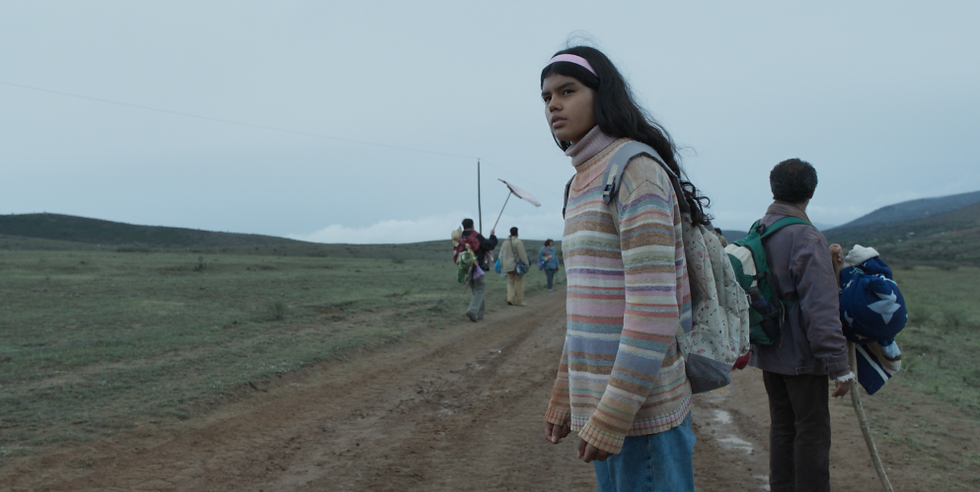
Ultimately, OCA is a symbolic, meditative work of cinema. Its ambiguity may frustrate some viewers, but its refusal to offer easy answers is precisely what makes it so resonant. OCA provides powerful direction, production and cinematography (all done by women) and performances (focused on women protagonists) that will resonate with anyone who's had to reflect on their own faith.

Like the wind Rafaela invokes at the beginning, the film carries us along, shifting, unpredictable, yet guiding us somewhere we’re meant to arrive. Somewhere we belong. Mexican filmmaker Karla Badillo has a bright future ahead and I look forward to her next cinematic journey.

I got to sit down with Karla Badillo & lead actress Natalia Solián and explored the world of inspiration that made OCA. Watch the full interview below.


Comments